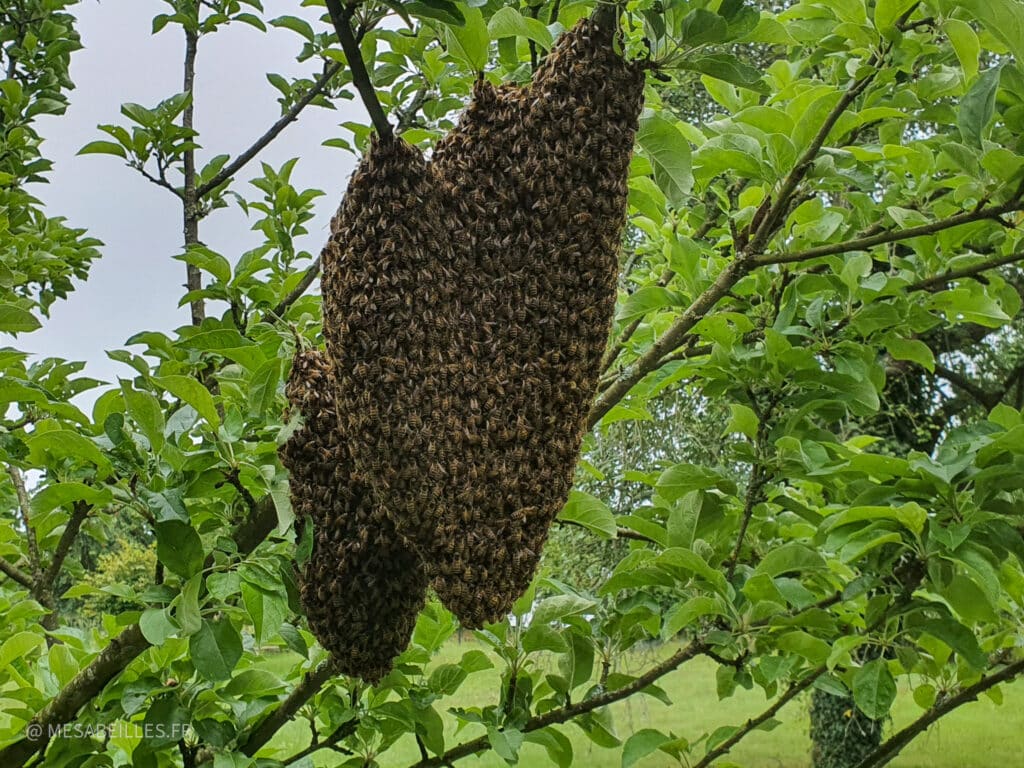
In spring and early summer, a strong colony may naturally divide. This is called swarming. Some of the workers leave with the old queen to establish a new colony.
Swarming is the natural way honey bee colonies reproduce. It often occurs when the population grows, the hive becomes crowded and nectar is plentiful. It does not necessarily mean the hive was poorly managed.
Workers often build several queen cells and raise replacement queens. Before departure, the old queen generally lays fewer eggs and becomes lighter. Thousands of workers fill their honey stomachs with food reserves.
In suitable weather, the old queen departs with part of the colony. The bees gather temporarily in a cluster on a branch, hedge or other surface, as shown in this photograph.
Scout bees inspect possible nest cavities, such as hollow trees or sheltered spaces. They return and use waggle dances to communicate the location and quality of each option. Through recruitment and comparison, the scouts gradually reach a collective decision. The swarm then flies to the chosen site.
The remaining workers raise a new queen in queen cells. After emerging, she may take mating flights before starting to lay eggs. Depending on conditions, multiple queen cells can also lead to secondary swarms.
Keep your distance, avoid sudden movements and never spray chemicals. A resting swarm is often relatively calm, but bees can sting when threatened. Contact a local beekeeper for safe collection, especially near busy areas.