Less familiar than workers and queens, drones play an essential role in honey bee reproduction.
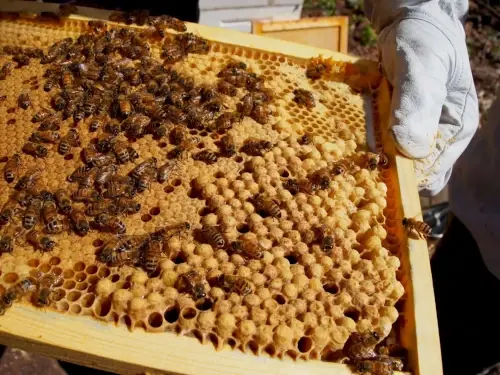
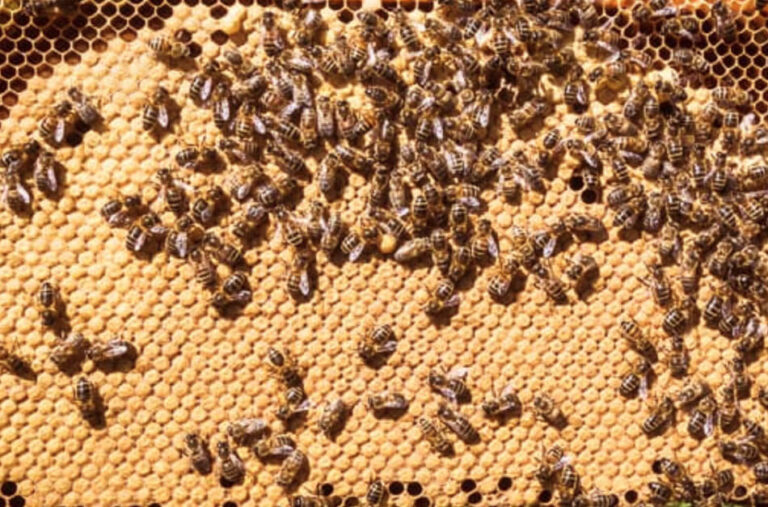
Drones are usually stockier than workers, with very large eyes that almost meet on top of the head. They have no sting. They do not collect nectar or pollen and do not build comb.
A drone develops from an unfertilised egg, a distinctive feature of honey bee reproduction.
Nurse bees feed the larva in a cell that is usually wider than a worker cell.
Workers cap the cell with a rounded, domed wax cover characteristic of drone brood.
The adult drone emerges and reaches sexual maturity over the following days.
Their primary role is to mate with young queens during mating flights, often at drone congregation areas. A drone that mates successfully dies after mating. Others return to the hive and consume colony food stores.
Drones may contribute to heat within the cluster, but they do not replace workers in their main duties. They do not forage or defend the hive with a sting.
Drones are most common in spring and summer. They often live for several weeks to roughly two months, depending on conditions. As food becomes scarce late in the season, workers may drive them out.
On a brood frame, worker brood typically has flatter cappings, whereas drone brood has noticeably domed cappings. Photographs of a drone and drone brood can be added here once supplied.
If National Geographic blocks embedded playback, watch on the National Geographic website (video page in French).