Every bee plays a vital role in the colony. Discover how a worker develops and how her duties change as she grows older.
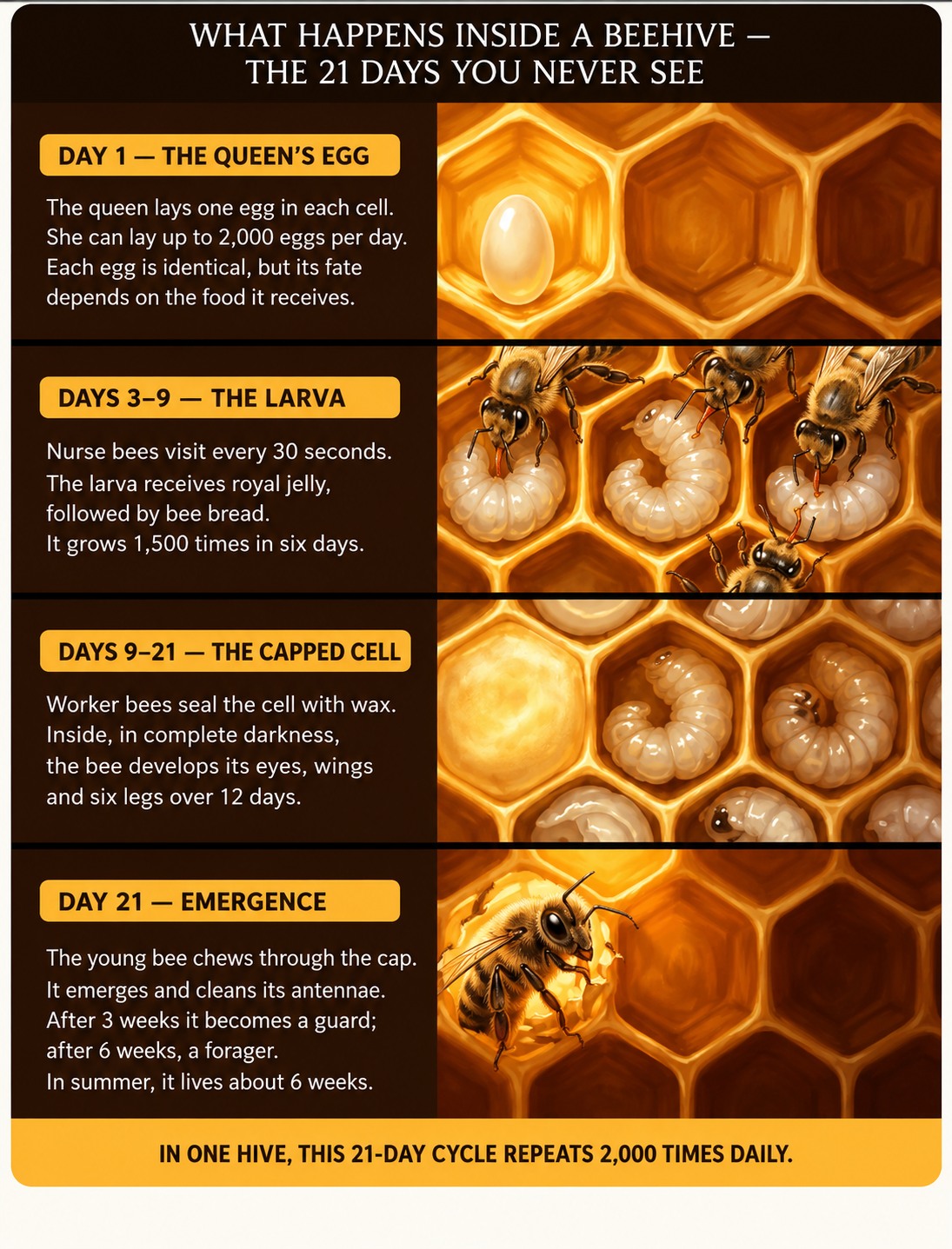
The queen lays an egg at the bottom of a cell. A tiny larva hatches after about three days.
Nurse bees feed the growing larva, which moults several times. Workers then seal the cell with wax.
Inside the capped cell, the larva becomes a pupa and develops legs, eyes and wings.
The young worker chews through the cap and emerges as an adult.
Worker bees generally change tasks as they age, although the colony’s needs can alter the schedule.
Cleans cells and prepares them for new eggs.
Feeds larvae and cares for the brood.
Builds comb, receives nectar and helps store food.
Helps regulate hive temperature and guards the entrance.
Collects nectar, pollen, water and propolis outside the hive.
Nectar mainly supplies sugars: it provides energy for flight and colony activities. Pollen, by contrast, provides proteins as well as fats, vitamins and minerals. It is essential for the development of young bees and for the functioning of the workers’ food-producing glands.
Foragers collect pollen grains from flower stamens, moisten them with a little nectar or saliva, and carry them in pellets on their hind legs. Back in the hive, workers pack the pollen into comb cells, where it is stored as bee bread.
Nurse bees eat pollen to produce glandular food for the larvae. As bees visit flowers, they also transfer pollen between blossoms and contribute to pollination.
Bees need water too. Some foragers specialise in collecting it from puddles, water sources or damp surfaces, carrying it home in their honey stomach. Back at the hive, they pass it to other workers.
In hot weather, bees spread tiny droplets of water inside the hive and fan their wings. As the water evaporates, it helps cool the brood nest, which needs to stay close to 34–35°C for developing young bees.
Water is also used to dilute honey and other stored sugars when preparing food for larvae. It therefore supports colony nutrition and helps regulate conditions inside the hive. Water demand increases particularly during hot weather and when there is plenty of brood.
A shallow water source with stones or landing places can help bees drink without drowning. It should be kept clean and positioned away from busy walking areas.
Summer workers often live for several weeks, while winter bees may survive for several months.
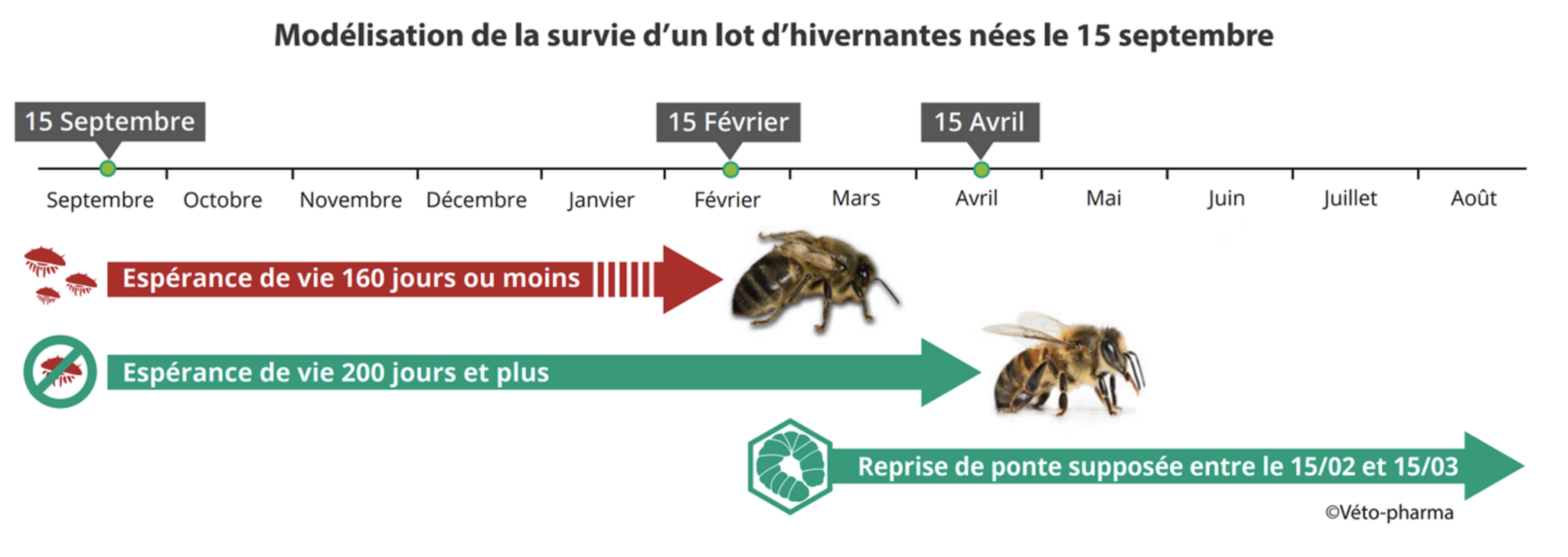
A summer worker often lives 3–6 weeks, as foraging and hive work take a heavy toll. A winter bee can survive 3–6 months, sometimes longer depending on conditions. She flies less, maintains important physiological reserves and helps keep the winter cluster alive until spring.
This illustration shows why bees born in late summer must be healthy. Varroa and the viruses it spreads can shorten their lives and weaken the colony before brood rearing resumes. The diagram's 160- and 200-day figures are modelling assumptions, not universal rules.
If playback is blocked, watch on YouTube.