The queen is the colony’s principal reproductive female. She lays eggs and produces pheromones that help keep the colony organised.
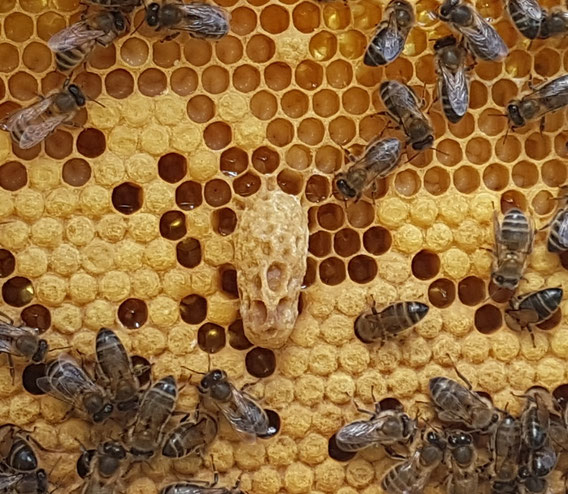
A queen develops from a fertilised egg, just like a worker.
Nurse bees raise the future queen in a special queen cell and feed her generously with royal jelly.
The queen cell is sealed and metamorphosis continues inside.
The young queen emerges and then needs time to reach sexual maturity.
After emergence, a young queen usually takes one or more mating flights and mates with several drones. She stores sperm in a specialised organ called the spermatheca and can lay eggs for years.
In favourable conditions, a vigorous queen can lay around 1,500–2,000 eggs a day. Fertilised eggs become females; unfertilised eggs become drones. Workers feed and groom her and care for the brood. Her pheromones help coordinate colony life.
Queens may live for several years, although egg-laying can decline with age. Workers may raise a replacement when a queen dies or becomes less productive, or before swarming.
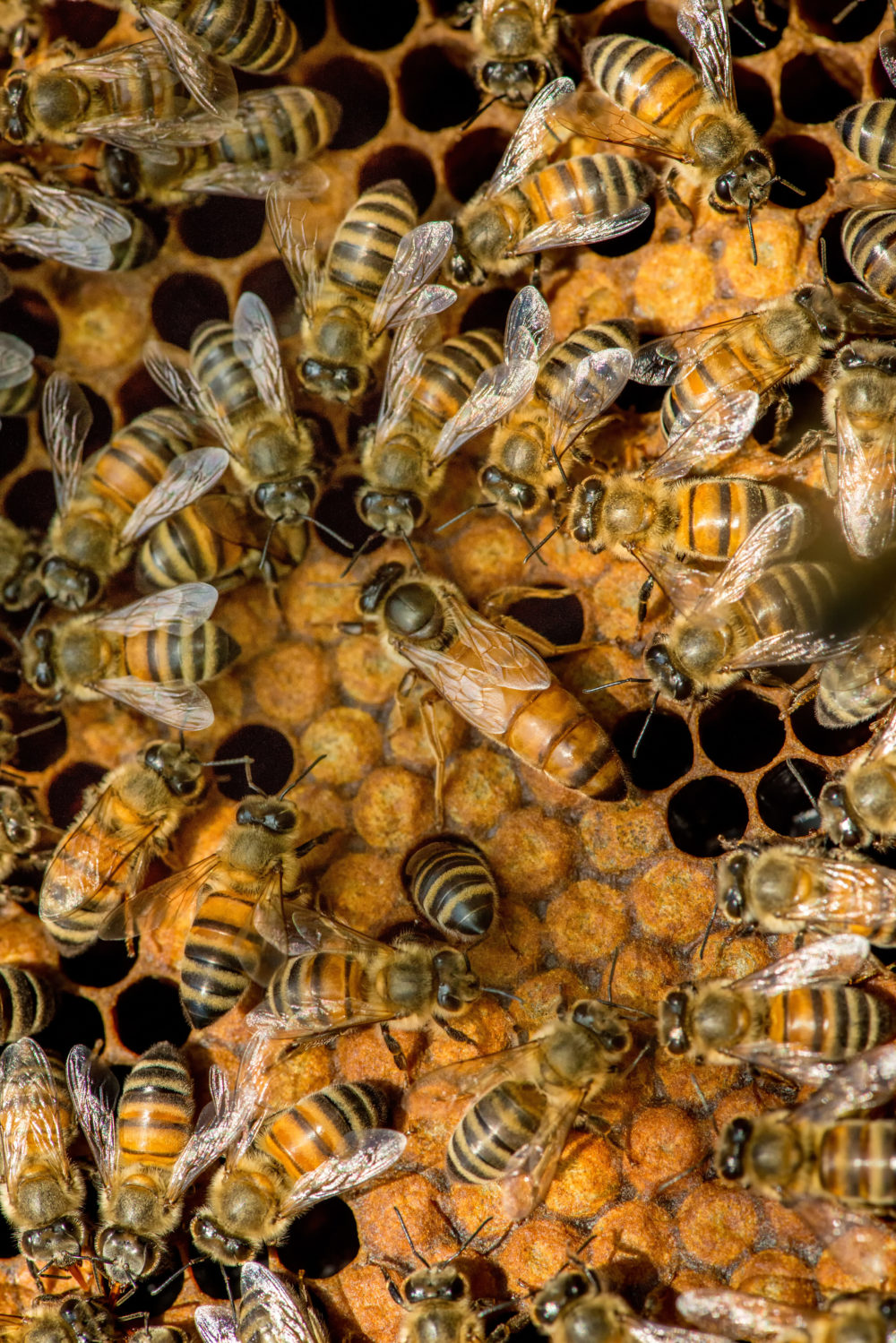
The queen does not forage outside the hive. Instead, she is fed directly by the workers surrounding her, known as her retinue. They pass food to her mouth-to-mouth (trophallaxis), including secretions from their food-producing glands, commonly described as royal jelly.
This rich, regular diet supports her egg-laying activity. Workers also groom her and pick up her pheromones as they touch and feed her. The queen therefore depends on the colony for food and care.
Beekeepers use an international five-year colour cycle to recognise queens and track their year of birth.
An experienced beekeeper places a small coloured mark on the queen’s thorax. The colour identifies the year, not the bee’s breed.