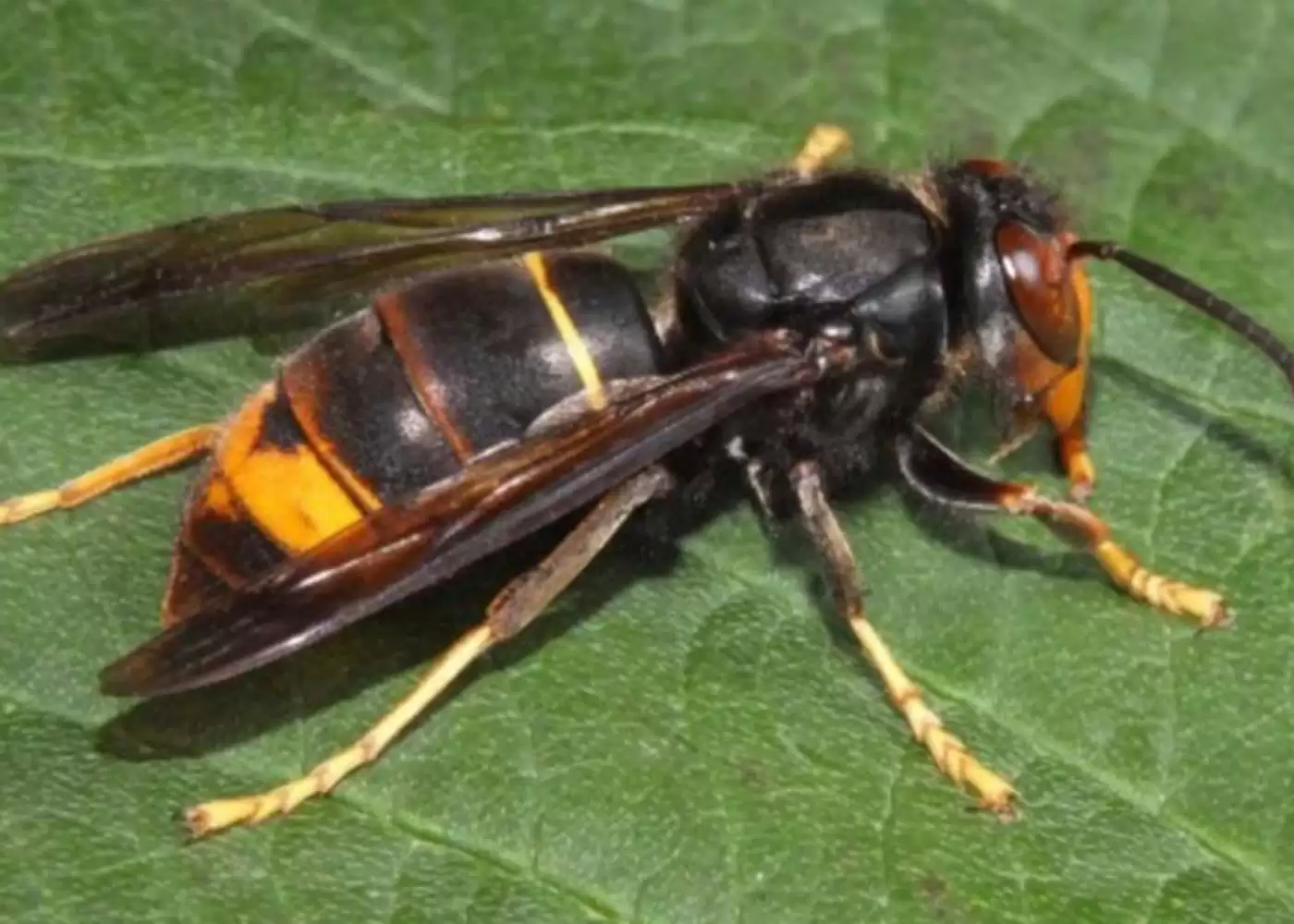
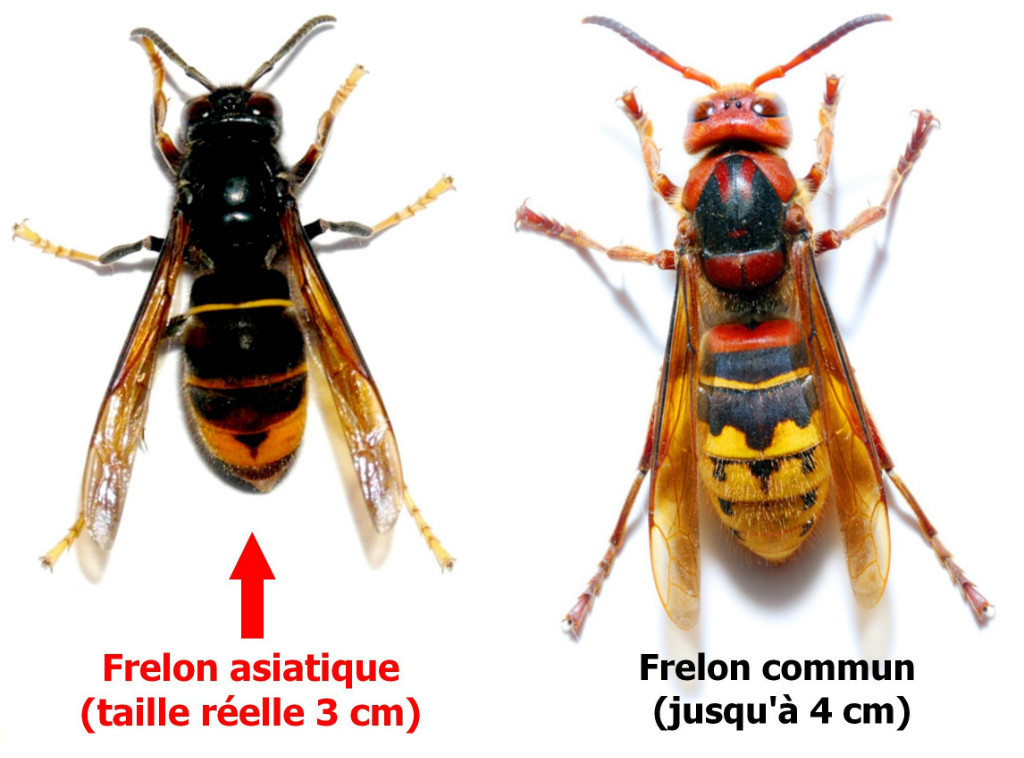
Vespa velutina is native to Asia. Accidentally introduced into southwestern France in the early 2000s, it spread to other European countries, including Switzerland. An overwintered queen founds a small nest in spring. As workers emerge, the colony grows and may build a larger secondary nest high in a tree. New queens and males are produced towards the end of the season. Mated young queens overwinter separately; the old colony normally dies and its nest is not reused.
Adults mainly consume sugary liquids such as nectar, ripe fruit and honeydew. They hunt insects to provide protein for their larvae, including honey bees, flies and wasps. Workers may hover outside hives, seize foragers and carry away the muscle-rich thorax. The number of bees caught varies greatly with nest size, season and proximity to apiaries; there is no reliable universal daily figure. Persistent hunting can also discourage bees from foraging.
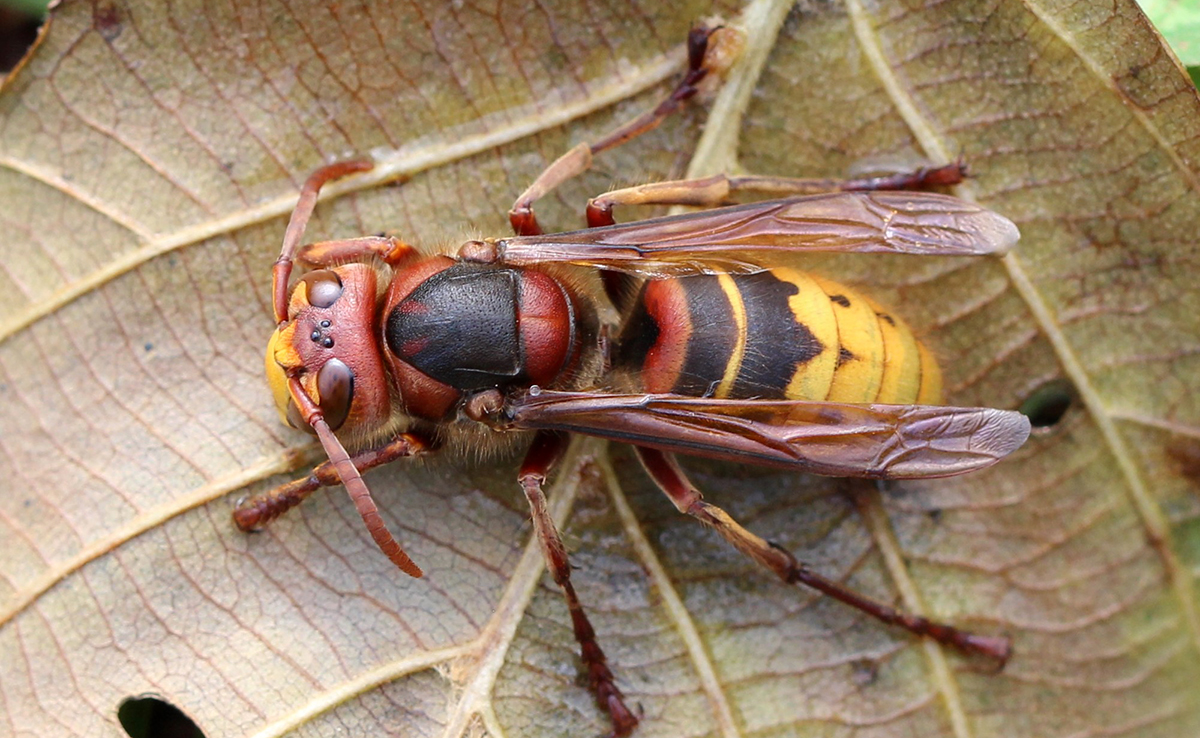
Vespa crabro is native to Europe. Its colonies have an annual cycle: a mated queen starts a nest in spring, workers raise the brood through summer, and new queens and males appear late in the season. Young mated queens overwinter alone while the old colony dies.
Adults seek sap, nectar and other sweet liquids. They hunt flies, wasps, caterpillars, other insects and occasionally honey bees to feed their larvae. According to the Swiss beekeeping organisation Bienen.ch, a European hornet colony may require around 500 g of mixed prey per day in August; this does not mean 500 g of honey bees. European hornets generally take far fewer bees at hive entrances than Asian hornets and help regulate insect populations.
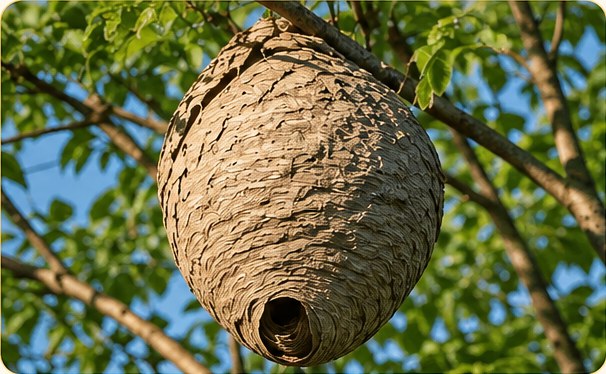
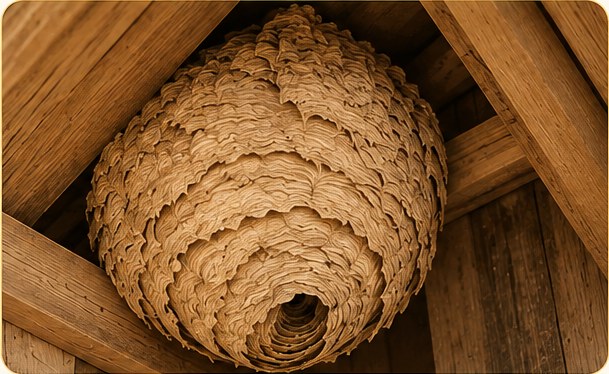
Illustrative images. Never approach or disturb a hornet nest; contact the appropriate local service.
Scientific and beekeeping references: Agroscope (Switzerland), USDA Agricultural Research Service, Bienen.ch. Figures are approximate and depend on conditions.